
TPO Roofing in North Carolina and South Carolina
TPO Roofing.
Plan Beyond the Membrane.
Landmark Roofing repairs and replaces TPO roofing for commercial properties across North and South Carolina. Start with a free inspection to review leaks, seams, drainage, and the condition below the surface. Get a defined scope that accounts for your building and the way it is used.

★★★★★
4.8 Rating

★★★★★
4.9 Rating
Schedule Your Free Inspection
Trusted. Certified. Satisfaction Guaranteed.
Prefer to call? (828) 408-0192
★★★★★
4.8 Google Rating
Trusted by Locals
A+
BBB Accreditation
Accountability in Practice
7+
Years Serving
Since 2019
✓
Licensed & Insured
NC #99411 • SC #CLG124587
$
Financing & Warranties
Options That Fit.
What Is TPO Roofing?
TPO, or thermoplastic polyolefin, is a single-ply membrane used on low-slope roofs. Heat-welded seams join the sheets, while flashing connects walls, drains, edges, and equipment. A reflective white surface can reduce solar heat absorption, but performance depends on the whole assembly and its upkeep.
Low-Slope Roof Concerns
Find the Cause of a Low-Slope Roof Leak
Water can travel before it appears inside the building. Have the roof checked for:
- Leaks returning after patches or heavy rain.
- Open seams or punctures.
- Water collecting near drains or low areas.
- Loose flashing at walls, edges, or equipment.
A local repair may be enough if the surrounding system is sound.
Weighing Your Options
Repair, Recover, or Replace?
What lies beneath the membrane matters alongside the visible damage. Landmark Roofing helps you compare the repair needs, removal work, and disruption involved in each suitable option.
Repair May Make Sense
- Damage is limited and accessible.
- The surrounding membrane is sound.
- The seam, puncture, or flashing can be corrected.
- The underlying assembly is dry and serviceable.
Replacement May Make Sense
- Leaks or deterioration are widespread.
- Wet insulation or damaged decking needs removal.
- Earlier repairs no longer solve the problem.
- The roof assembly needs substantial changes.
What About a Roof Recover?
Installing a new membrane over an existing roof may be possible for a suitable assembly. Moisture, existing layers, drainage, and attachment need evaluation first. Confirm what will remain and what must be removed.

TPO Roofing Experience
Plan Your TPO Roof With Landmark Roofing
- Commercial roofing service across North and South Carolina.
- Free inspections before choosing repairs or replacement.
- A scope covering membrane, flashing, drainage, and supporting repairs.
- Planning around access, equipment, and building operations.
- Review of the care and warranty documents that apply.
TPO Project Costs
What Goes Into the Cost of a TPO Roof?
A membrane price alone does not show the total work. Review removal, insulation, drainage, flashing, and attachment in the estimate. Landmark Roofing starts with the roof’s condition so the proposal reflects your building. Confirm how hidden damage or additional work will be handled.
What Affects Your Estimate?
- Roof area, height, and access.
- Removal and disposal.
- Wet insulation or damaged decking.
- Insulation and drainage improvements.
- Membrane and attachment method.
- Curbs, drains, and perimeter details.
- Operating hours and project phasing.
Insulation, Seams, and Drainage
Plan the Complete TPO System
Review the layers and details beneath and around the membrane before approving a roofing proposal.
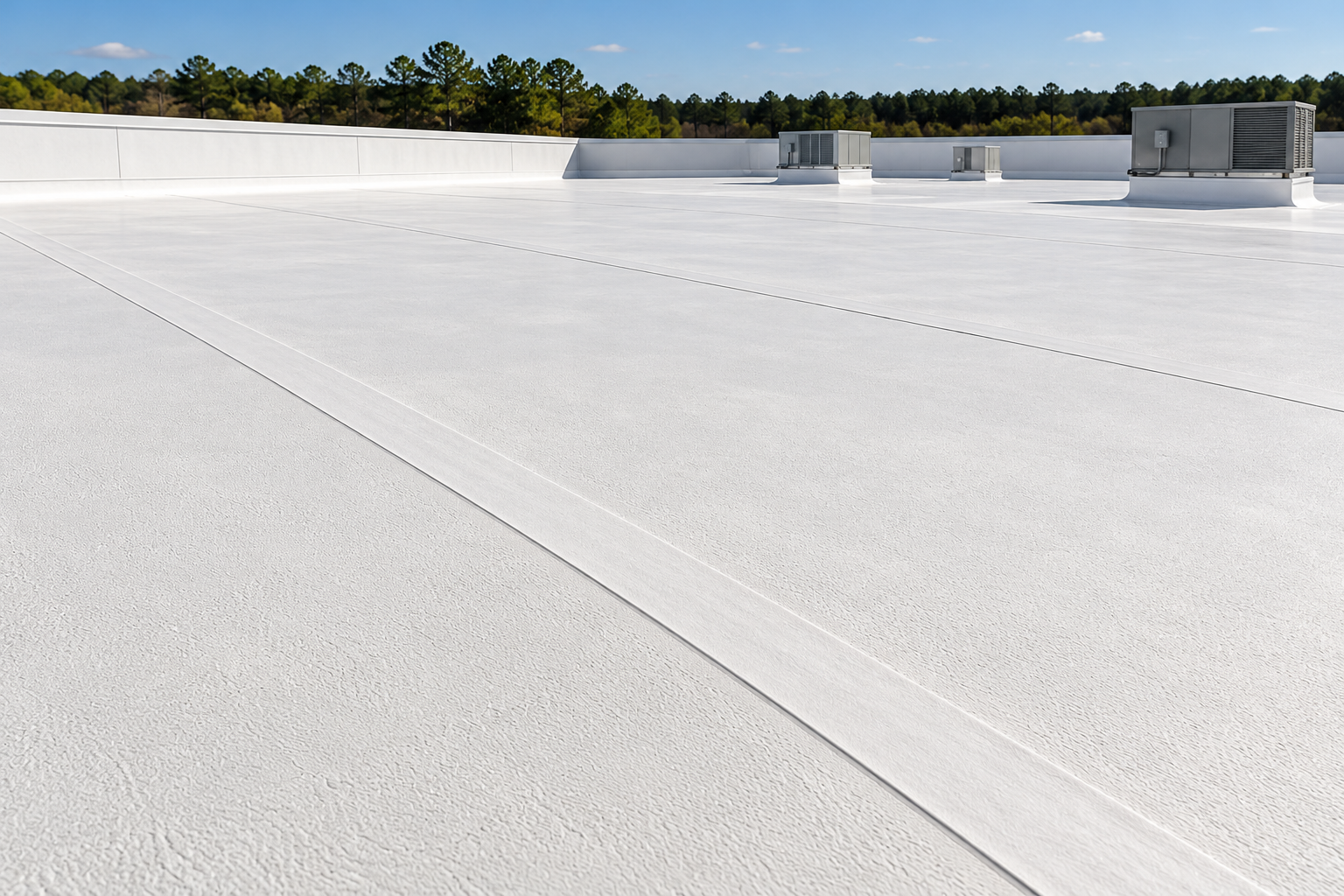
Membrane & Seams
Sheets are joined with heat-welded seams. The plan should address transitions and roof openings as well as the main surface.

Insulation
Check for moisture and assess the existing insulation before covering it. Review the proposed assembly and its fit with the building’s needs.

Drainage & Flashing
Account for drains, low spots, walls, edges, and equipment curbs. A new membrane alone will not correct every drainage problem.

Access & Upkeep
Plan routes for rooftop service and protection near equipment. Regular checks can catch punctures, seam damage, and drainage issues.
How the Work Progresses
Your TPO Project, Step by Step
Inspect

Check visible membrane damage, seams, flashing, drainage, and signs of moisture.
Define the Scope

Compare appropriate repair and replacement options with a written scope and estimate.
Plan the Work

Confirm materials, access, equipment coordination, and timing.
Install

Complete the agreed preparation and install the specified system, including the perimeter and drainage details.
Review & Maintain
Review the finished work, cleanup, coverage documents, and recommended care.

★★★★★
5-STAR AVERAGE RATING
Based on 126+ Verified Google Reviews.

Warranty Terms
TPO Roofing Warranties
Material & System Coverage
Review the selected manufacturer’s written terms, required assembly, exclusions, and maintenance obligations.
Workmanship Coverage
Ask Landmark Roofing to confirm the installation coverage for your project. Keep its written terms with the roof records.
TPO Roofing Questions
TPO Roofing FAQs
How can I tell whether TPO suits my building?
The roof slope, drainage, equipment, exposure, and existing assembly all matter. Landmark Roofing can inspect the property and discuss TPO alongside other appropriate commercial roofing options.
When can TPO damage be repaired locally?
A puncture, seam issue, or flashing defect may be repairable if the nearby membrane and supporting layers are sound. Widespread deterioration or trapped moisture can require more work.
Will a white membrane lower my energy costs?
A reflective surface can reduce heat absorbed from sunlight. Energy use also depends on insulation, climate, building use, and the rest of the assembly. Specific savings should not be assumed.
Does the existing roof have to be removed?
A recover requires an assessment of moisture, existing layers, attachment, drainage, and system requirements. Wet or damaged materials may need removal. Confirm the proposed preparation in writing.
How is the installation schedule determined?
Roof size, access, weather, removal, and underlying repairs affect timing. Review the expected work window and how the building will be protected during the project.
How will roofing work affect business operations?
Discuss operating hours, noise, access, rooftop equipment, and sensitive areas before scheduling. The project plan should address the building’s particular occupancy and safety needs.
What should be checked during routine care?
Keep drainage clear and have seams, flashing, punctures, and roof edges inspected. Checks after storms or rooftop service visits can be useful. Follow the installed system’s maintenance guidance.
What warranty documents should I keep?
Keep the manufacturer’s terms and any workmanship coverage from Landmark Roofing, along with the installation scope and care information. Confirm duration, exclusions, and maintenance responsibilities before work begins.
YOUR ROOF. A CLEAR NEXT STEP.
Get Answers About Your Roof Before Making a Decision
Tell us about your leak, storm damage, or upcoming roof project. We’ll inspect your roof for free, explain what we find, and walk you through your options.